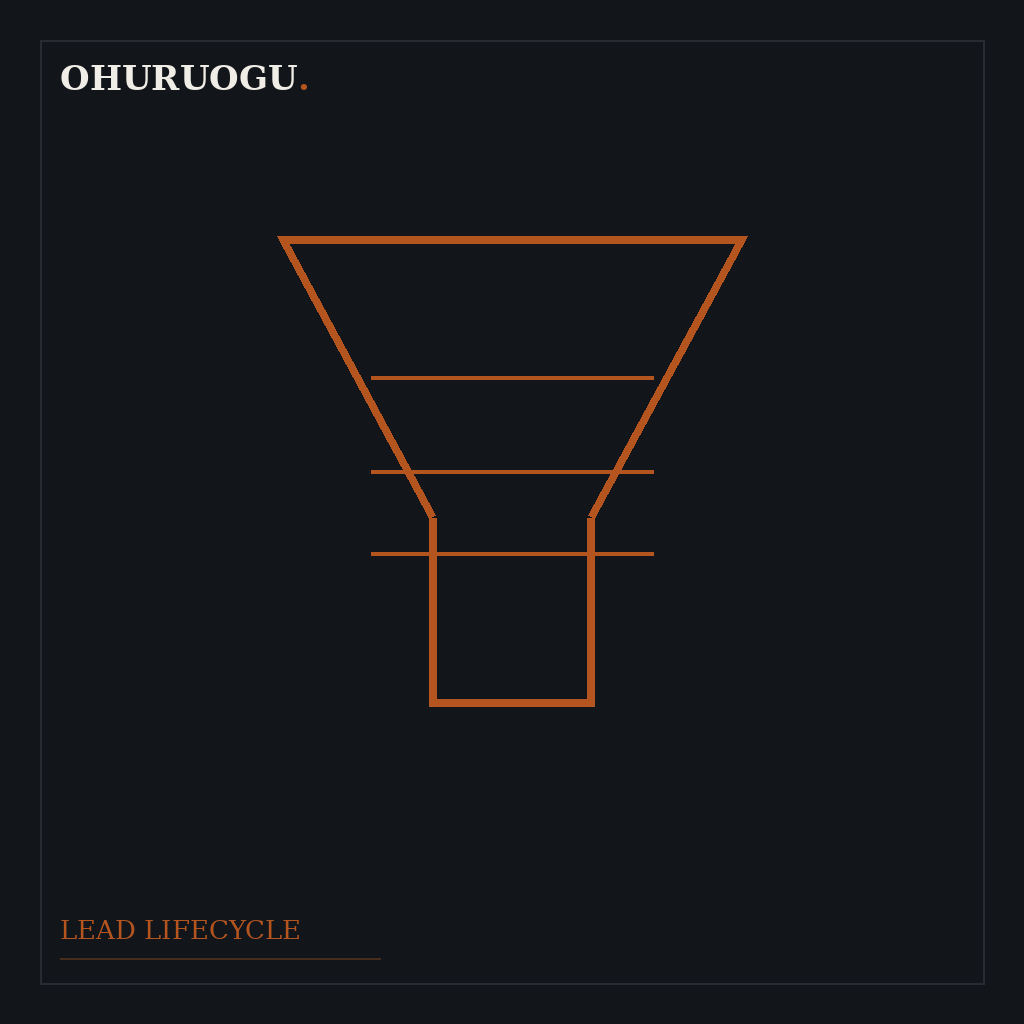
A sales pipeline is the set of stages a deal moves through from first contact to closed. The standard B2B SaaS pipeline has six: Lead, Qualified, Discovery, Proposal, Negotiation, and Closed (Won or Lost). Each stage should have a clear definition and a clear exit criterion — the specific, observable thing that must be true before a deal moves forward.
That last part is where most pipelines fall apart. Stages without exit criteria become a matter of opinion, and a pipeline built on opinion can’t be forecast.
The standard stages
Here’s each stage, what it means, and — crucially — what has to be true to leave it.
1. Lead. A contact has entered the pipeline but hasn’t been qualified. Exit criterion: a rep has confirmed the basics — right company profile, a plausible need, a real person. Not “they downloaded an ebook.”
2. Qualified. The lead fits your ideal customer profile and has a reason to talk. Exit criterion: a discovery conversation is booked. Qualification without a next meeting is just a wish.
3. Discovery. You’re actively learning the prospect’s situation — problem, impact, decision process, timeline. Exit criterion: you’ve confirmed a real problem, a budget owner, and a rough timeline. If you can’t name the economic buyer, you’re not out of Discovery.
4. Proposal. You’ve presented a solution and pricing. Exit criterion: the prospect has received the proposal and agreed to a decision conversation. A proposal sent into silence hasn’t advanced the deal.
5. Negotiation. You’re working through terms, pricing, and procurement. Exit criterion: verbal agreement on scope and price, with only paperwork remaining.
6. Closed. Won or Lost. Exit criterion: signed contract (Won) or a documented reason (Lost). “Closed Lost — no reason” is a data hole you’ll regret at forecast time.
Why exit criteria matter more than the stages
You can name your stages anything. What makes a pipeline forecastable is that every deal in a given stage has met the same, observable bar to be there. Without that, “Proposal” means “I sent something” for one rep and “they’re about to sign” for another — and your forecast is the average of two different definitions.
The test is simple: pick any deal in your pipeline and ask “what specifically has to be true for this to be in this stage?” If the answer is a rep’s gut feeling, you’ve found a leak. If it’s an observable fact, you’ve got hygiene.
Common mistakes
- Too many stages. If you have eleven stages and reps skip half of them, the extra stages are noise. Six is plenty for most B2B SaaS motions.
- Stages that describe your activity, not the buyer’s. “Demo given” is about you. “Problem confirmed, buyer identified” is about them — and it’s a far better predictor of whether the deal closes.
- No exit criteria at all. The most common one. It’s also the cheapest to fix — you can define exit criteria in an afternoon and enforce them in your CRM the same week.
How this connects to pipeline leakage
Stages are also where deals stall. A deal that sits in Discovery for 60 days isn’t progressing — it’s leaking, slowly, while nobody notices because it’s technically still “in pipeline.” Clear stage definitions with exit criteria make that visible: a deal that can’t meet the exit criterion is a deal that should be re-qualified or closed, not left to inflate your forecast.
Want to see where your pipeline actually leaks — by stage, with numbers? The Pipeline Leak Audit maps it. Or keep reading on the Insights page.
Related reading
If this was useful, see what a sales-qualified lead is and keeping those stages honest.